10 Common Coffee Brewing Mistakes and How to Avoid Them
Most bad coffee isn't a bean problem — it's a technique problem. Fix any two of these ten mistakes and your next cup will prove it.
You don't need to make all ten. Most people are making three or four at once, and fixing just two will transform the cup. Here they are, roughly in order of how much damage they're doing.
1. Using pre-ground coffee from a can
Pre-ground coffee sold in cans is often roasted months before you buy it and has been oxidizing in that tin since. It tastes flat because it is flat. Buy a cheap burr grinder (₹1,500–₹2,500 for a decent hand grinder) and whole beans with a roast date.
2. Ignoring the roast date
A bag that says "Best Before December 2026" tells you nothing useful. You want to know when it was roasted. Fresh beans are ideally used within 2–4 weeks of roast. If there's no roast date, pass.
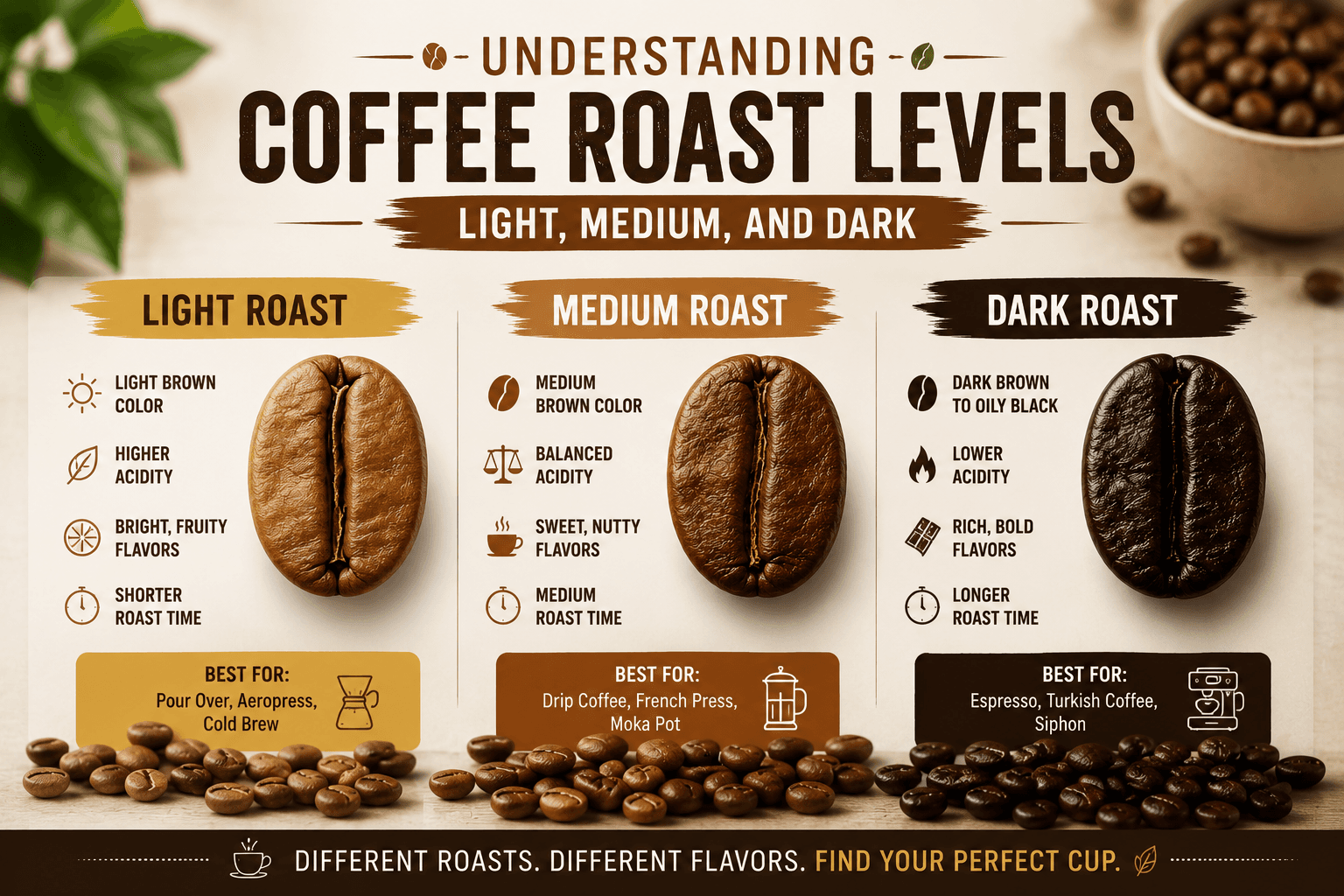
3. Using the wrong grind size for your method
Fine grounds in a French press = sludge and bitterness. Coarse grounds in a Moka pot = weak, sour coffee. Each method extracts differently based on how long water contacts the grounds. Match your grind to your brewer.
4. Boiling water poured directly on grounds
Water at 100°C burns the coffee. Pull it off heat, wait 30–45 seconds, or use a thermometer and target 93°C. The bitter taste you attribute to "dark roast" is often just scalded grounds.
5. Not cleaning your equipment
Coffee oils go rancid. That brown residue in your French press or the gunk in your machine's filter basket is old fat, and it's ruining every new brew with a layer of stale flavor. Clean your brewer after every use. Descale machines monthly.
6. Wrong coffee-to-water ratio
Most people use too little coffee and compensate by brewing longer — which extracts bitterness without strength. Use a scale. Start at 1:15 (coffee:water by weight) and adjust from there. Don't eyeball scoops.
7. Storing beans in the freezer
Counterintuitive, but the freezer introduces moisture and odor absorption. Beans stored next to last week's leftovers will taste like it. Keep coffee in an airtight, opaque container at room temperature. If you must freeze, vacuum seal and only freeze beans you won't use for weeks.
8. Skipping the bloom
For any pour-over method — Chemex, V60, or similar — the bloom is not optional. Add a small amount of water first, let it degas for 30 seconds, then pour the rest. Skipping this creates CO₂ bubbles that block even extraction and flatten the flavor.
9. Buying cheap blade grinders
Blade grinders don't grind — they chop, creating uneven particle sizes. Small pieces over-extract (bitter), large pieces under-extract (sour) — simultaneously, in the same brew. A burr grinder crushes beans uniformly. Even a hand burr grinder at ₹1,500 beats a ₹3,000 blade grinder for cup quality.
10. Judging a brewing method by one attempt
Pour-over tastes weak your first time because you used too coarse a grind. Moka pot tastes bitter because the flame was too high. AeroPress tasted muddy because you forgot to rinse the filter. Every method has a learning curve of 4–5 brews. Give it that before abandoning it.